Annual employer cost of health-related economic inactivity (Keep Britain Working Review)
Per-day cost of a single absent employee
Annual HSE cost of MSK-related sickness absence — the single largest named cause of UK workplace absence (2023/24)
Vanguard employers — 1.5 million workers — now active in the BSI Healthy Working Standard programme
Four structural failures:
NO PREDICTIVE SIGNAL
Organisations respond to absence after it happens. By the time an employee is signed off, the cost has already been incurred — in lost productivity, management time, and overtime cover. The Mayfield Review identifies the absence of early intervention infrastructure as a structural failure.
NO FINANCIAL MEASUREMENT
Absence data sits in HR systems. Cost data sits in Finance. The two are almost never connected. Section 151 Officers cannot quantify MSK liability on their own balance sheet — meaning the risk is invisible to the people with the mandate to act.
POLICY INTENT WITHOUT INFRASTRUCTURE
Mayfield recommends an employer-led, data-driven approach to workforce health. But most organisations have no mechanism to produce the metrics the incoming Workplace Health Intelligence Unit will require — days lost, return-to-work rates, MSK-disaggregated absence data.
RISK POOLED, NOT MANAGED
Under current models, MSK risk is distributed across a workforce invisibly — with no individual-level scoring, no stratification, no risk register. High-risk individuals are indistinguishable from the general population until they are absent.
NO STATUTORY EVIDENCE LAYER
Employers already carry a legal duty, under the Health and Safety at Work etc. Act 1974 and the Management of Health and Safety at Work Regulations 1999, to assess and manage risks to employee health, including musculoskeletal risk. Councils that cannot show structured, documented action face real exposure under that existing duty, and a strengthening statutory direction of travel, the Mayfield review and the incoming Work Health Impact Unit, makes that exposure harder to ignore every year. Without a platform that generates audit-ready evidence, there is no defence.

Employers — including local authorities — already have an enforceable duty under the Health and Safety at Work etc. Act 1974 and the Management of Health and Safety at Work Regulations 1999 to assess and manage risks to employee health, including musculoskeletal risk.
This is not a discretionary programme. It is a live legal duty — and the direction of statutory travel, through the Mayfield Review and the incoming Work Health Impact Unit, is toward far more specific evidential expectations than exist today.
MSK is the largest single named cause of UK workplace absence. For every Finance Director and Section 151 Officer, the question is no longer “should we invest in this?” It is “can we evidence that we acted?”
ALIGN.R3™, Powered by BIOMECH.AI™, is the audit-ready evidence layer. BAI™ risk scoring, disaggregated absence data, and documented intervention triggers — structured to meet that existing duty, and the rising evidential bar ahead of it.

A structured 30-input model — captures data across five dimensions, then converts it into board-ready outputs.
One number for the whole organisation
Indicators broken down by team
Board-level financial reporting

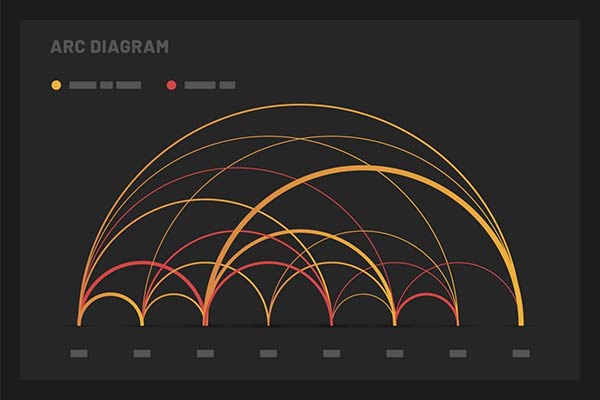
Employees complete a simple, structured 30-question assessment

ALIGN.R3 engine processes inputs into measurable alignment signals

Data is converted into business-critical outputs:
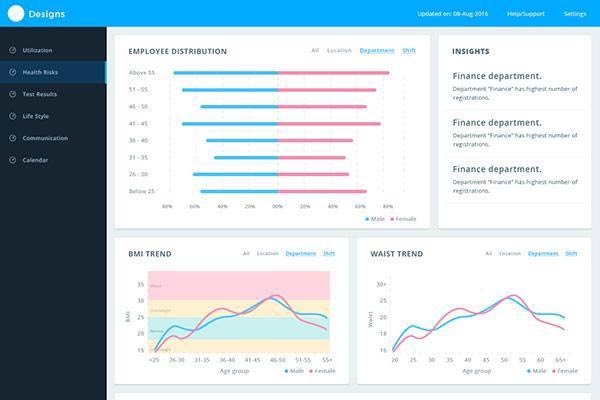
Leaders gain clear, prioritised actions to improve workforce performance
The Mayfield Review does not ask UK employers to consider acting on workplace health. It tells them to. For Finance Directors and Section 151 Officers at UK local authorities, this represents a structural shift — health-related absence is now a government-recognised balance sheet liability, not a discretionary HR concern.
ALIGN.R3™ was built for precisely this moment. Each of the five windows below represents a concrete procurement and policy opportunity your council can act on — now.
The Workplace Health Intelligence Unit will aggregate workplace health data and underpin certified procurement standards. ALIGN.R3™'s ML pipeline and BAI™ scoring infrastructure is precisely the data asset the WHIU will reference. Early positioning as an MSK intelligence provider before WHIU launch creates institutional credibility no sales process can manufacture.
The report calls for a certified standard covering sickness absence reduction, return-to-work outcomes, and disability inclusion. ALIGN.R3™ SCD outputs — BAI™ risk scores, absence predictions, intervention triggers — map directly to the three Vanguard deliverables. Every Structured Commercial Deployment we run generates evidence the Healthy Working Standard will require.
The £85bn figure comes directly from the Keep Britain Working Review, and the underlying MSK cost data comes from the Health and Safety Executive. Section 151 Officers can cite both directly, with full attribution, rather than relying on a vendor estimate.
Government is launching a 3-year programme with hundreds of employers and mayoral authorities ready to participate. ALIGN.R3™'s SCD offer is explicitly framed as a Vanguard-aligned programme.
The Mayfield Review is damning about the fit note system — it fails to generate useful data or support early intervention. ALIGN.R3™'s predictive risk identification catches MSK drift before a fit note is ever issued. This positions us as the intervention layer the fit note system cannot provide — compelling for both FD audiences and WHIU engagement.
The Healthy Working Lifecycle Standard, now being developed with the British Standards Institution, will become the certified basis for general employer adoption across the UK. Councils that deploy ALIGN.R3™ under Structured Commercial Deployment during the Vanguard Phase generate the structured, disaggregated MSK evidence the BSI standard will require. Those that wait will face a certification gap — and a procurement conversation they cannot win on evidence. First movers set the benchmark. Late movers buy compliance.
ALIGN.R3™ was conceived, designed, and built by Christopher M. Davies — a founder-builder and his dedicated team who constructed the platform’s entire technology stack and go-to-market strategy from scratch, unencumbered by external pressures, legacy systems or past thinking.
Chris identified a structural gap that existing occupational health tools had failed to address: the complete absence of MSK risk intelligence at the CFO level. Where peers offered engagement surveys and generic referrals, ALIGN.R3™ was designed as a financial risk instrument.
The BAI™ scoring model is built on biomechanical principles across six distinct risk dimensions — no simplifications, no generic questionnaires repurposed from consumer health tools.
Powered by BIOMECH.AI™, ALIGN.R3™ was built for a market being reshaped right now — by the Employment Rights Act 2025, the Keep Britain Working Vanguard Phase, and the BSI Healthy Working Standard currently in development.
Every feature, metric, and output is designed to make sense inside a finance director’s budget review — not inside an HR team’s programme.
The BAI™ scoring model is built on biomechanical principles with six distinct risk dimensions — no generic questionnaires repurposed from consumer health tools.
Developed in direct anticipation of the UK government’s Workplace Health Intelligence Unit. Our data architecture outputs the disaggregated MSK metrics WHIU will require from day one.
We ask councils to validate the approach before committing to a commercial relationship — a Structured Commercial Deployment with zero procurement friction.
MSK absence is your largest controllable liability. It sits in plain sight on your balance sheet — hidden inside sickness rates, agency spend, and Occupational Health referrals that resolve nothing.
ALIGN.R3™ Powered by BIOMECH.AI™ changes that. But only for organisations prepared to change with it.
Every Finance Director nods at the MSK numbers. Every Chief People Officer acknowledges the gap in their intelligence picture. Then they ask for a free trial. A free trial signals something important — not about budget, but about intent. Organisations that are not prepared to put a commercial value on risk intelligence are, almost without exception, not prepared to act on it either.
We’ll send you a one-page Vanguard-aligned programme overview and follow up to arrange a 30-minute call.